Orateur: Prof. Yousoo KIM (Surface and Interface Science Lab., Riken, Japan and Center for Quantum Conversion Research, IBS Gwangju, Korea)
Résumé : Energy conversion at the molecular scale is governed by the interplay of electronic, vibrational, and optical degrees of freedom, often through processes that remain hidden in ensemble-averaged measurements. In this talk, I will discuss our efforts to visualize and understand such processes at the level of individual molecules by combining scanning probe microscopy with optical and ultrafast spectroscopy.
I will first introduce how atomic-scale junctions can be used not only to image molecules, but also to probe their excited states, charge-transfer processes, and energy-dissipation pathways with unprecedented spatial resolution. Particular emphasis will be placed on single-molecule exciton dynamics, photocurrent generation, and vibration–phonon coupling at surfaces. I will then discuss our recent development of ultrafast THz-driven scanning tunneling microscopy, which provides access to excited-state dynamics with simultaneous atomic-scale spatial and picosecond temporal resolution.
These studies illustrate how local probes can reveal the elementary pathways through which energy is absorbed, converted, transported, and dissipated in individual quantum systems, providing a microscopic basis for understanding and ultimately controlling molecular-scale energy conversion.
Dr. Daniel J. Cutler (Marie SkłodowskaCurie Actions Global Postdoctoral Fellow
LabMolDesign / Rawson Group ; Universitat de Barcelona / University of Windsor )
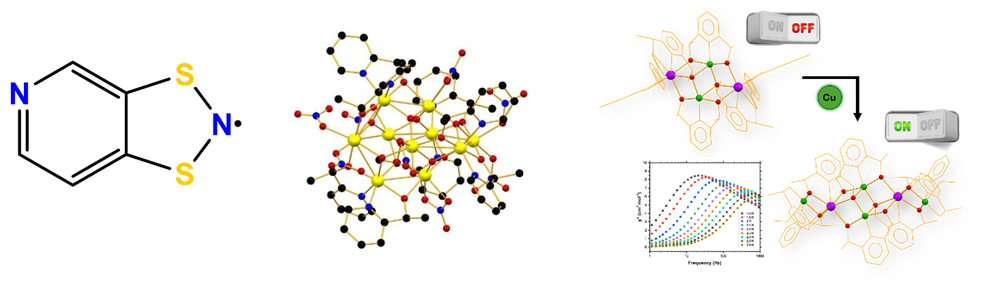
Résumé : The field of molecular magnetism focuses on the development of magnetic materials by the utilization of the so-called “bottom-up” approach, using paramagnetic building blocks to prepare new materials with desirable magnetic properties.1,2 Some common choices of building blocks include transition metal (TM) and lanthanide (Ln) ions, and open-shell radicals. The combination of these starting materials into different architectures can tune the magnetic properties of the material to afford sought after magnetic properties ranging from slow magnetic relaxation dynamics, spin crossover behaviour, magnetic frustration and high-spin bearing species. This seminar will present work based on two themes, TM and Ln coordination cluster chemistry and main group thiazyl radical chemistry.
Polymetallic coordination clusters are some of the most well studied magnetic molecules with the dodecametallic Mn12-acetate cluster being the first reported Single Molecule Magnet (SMM).3 Here we present work building cluster compounds with TM ions (CuII and FeIII) and Ln ions (DyIII, TbIII and GdIII) using flexible pyridyl alkoxide ligands. The CuIILnIII butterfly system displays a “switching on” effect where the addition of auxiliary un-paired spins, in the form of CuII, switches on the slow magnetic relaxation of the molecule. Work with FeIII ions focuses on the effects on cluster preparation when using chiral vs racemic chelates. We report a family of six cluster compounds ranging from a simple Fe2 dimer to a Fe10 decamer.
Main group thiazyl radicals have proven to be promising candidates for designing tuneable magnetic materials. To date work with these radicals have afforded material with properties varying from canted anti-ferromagnetism,4 single molecule magnetism5 and spin crossover.6 The 4- pyDTA radical, presented, displays hysteric spin crossover behaviour in the solid state as a result of a first order phase transition. Investigations with variable temperature EPR, magnetometry and XRD methods elucidate the nature of this transition
References:
1.- M. B. Duriska, S. M. Neville, B. Moubaraki, J. D. Cashion, G. J. Halder, K. W. Chapman, C. Balde, J.-F. Létard, K. S. Murray, C. J. Kepert and S. R. Batten, Angewandte Chemie International Edition, 2009, 48, 2549–2552.
2.- S. Sanz, H. M. O’Connor, E. M. Pineda, K. S. Pedersen, G. S. Nichol, O. Mønsted, H. Weihe, S. Piligkos, E. J. L. McInnes, P. J. Lusby and E. K. Brechin, Angewandte Chemie International Edition, 2015, 54, 6761–6764.
3.- H. J. Eppley, H.-L. Tsai, N. de Vries, K. Folting, G. Christou and D. N. Hendrickson, Journal of the American Chemical Society, 1995, 117, 301–317.
4.- D. Leckie, M. Harb, N. Mroz, J. D. Wrixon, J. Campo, A. Arauzo, H. Bakhshi, M. Pilkington and J. M. Rawson, J. Am. Chem. Soc., 2024, 146, 31371–31376.
5.- E. M. Fatila, M. Rouzieìres, M. C. Jennings, A. J. Lough, R. Clérac and K. E. Preuss, Journal of the American Chemical Society, 2013, 135, 9596–9599.
6.- W. Fujita and and K. Awaga, Science, 1999, 286, 261–262.
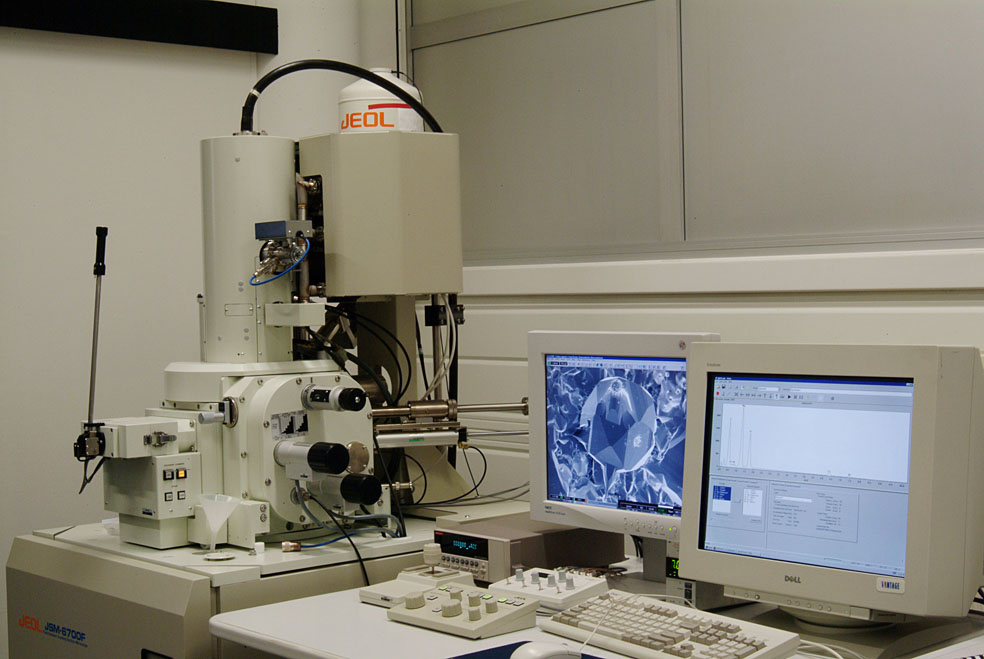
Cette visite offrira l’opportunité de découvrir des équipements de pointe et d’échanger avec les équipes scientifiques autour des avancées en nanosciences.
Orateur : Christophe COPÉRET (ETH Zurich, Department of Chemistry and Applied Biosciences)
Résumé : Most efficient chemical processes used in industry rely on heterogeneous catalysis. While the search for more sustainable processes and the changes in environmental policies impose the continuous development of more efficient catalysts, we have currently little understanding of the structure of the actives in these processes. Hence, due to their inherent complexity, heterogeneous catalysts have been mostly developed empirically.
Here, we will show how constructing active sites, one atom at a time on surfaces, enables molecular-level understanding and implementation of rational approaches for the improvement of catalytic processes. We will first illustrate how this approach enables to generate selective single-site catalysts. We will next show how from these isolated (single) sites, one can generate and understand far more complex systems such as supported nanoparticles, where interfaces, alloying… play a critical role. This lecture will be developed around these themes and will show how the development of advanced characterization tools augmented by computational approaches can provide useful information to bridge the gap between fundamental and applied (industrial) catalysis. Furthermore, alternative complementary approaches based on data-driven high-throughput experimentations will be also discussed, paving the way for automated discovery and development of catalysts.
Prof. Galo J. A. A. Soler-Illia ( Instituto de Nanosistemas, Escuela de Bio y Nanotecnologías, Universidad Nacional de General San Martín, San Martín, Argentina )

'/%3E%3C/svg%3E)